
Conflicts in a Multipolar World
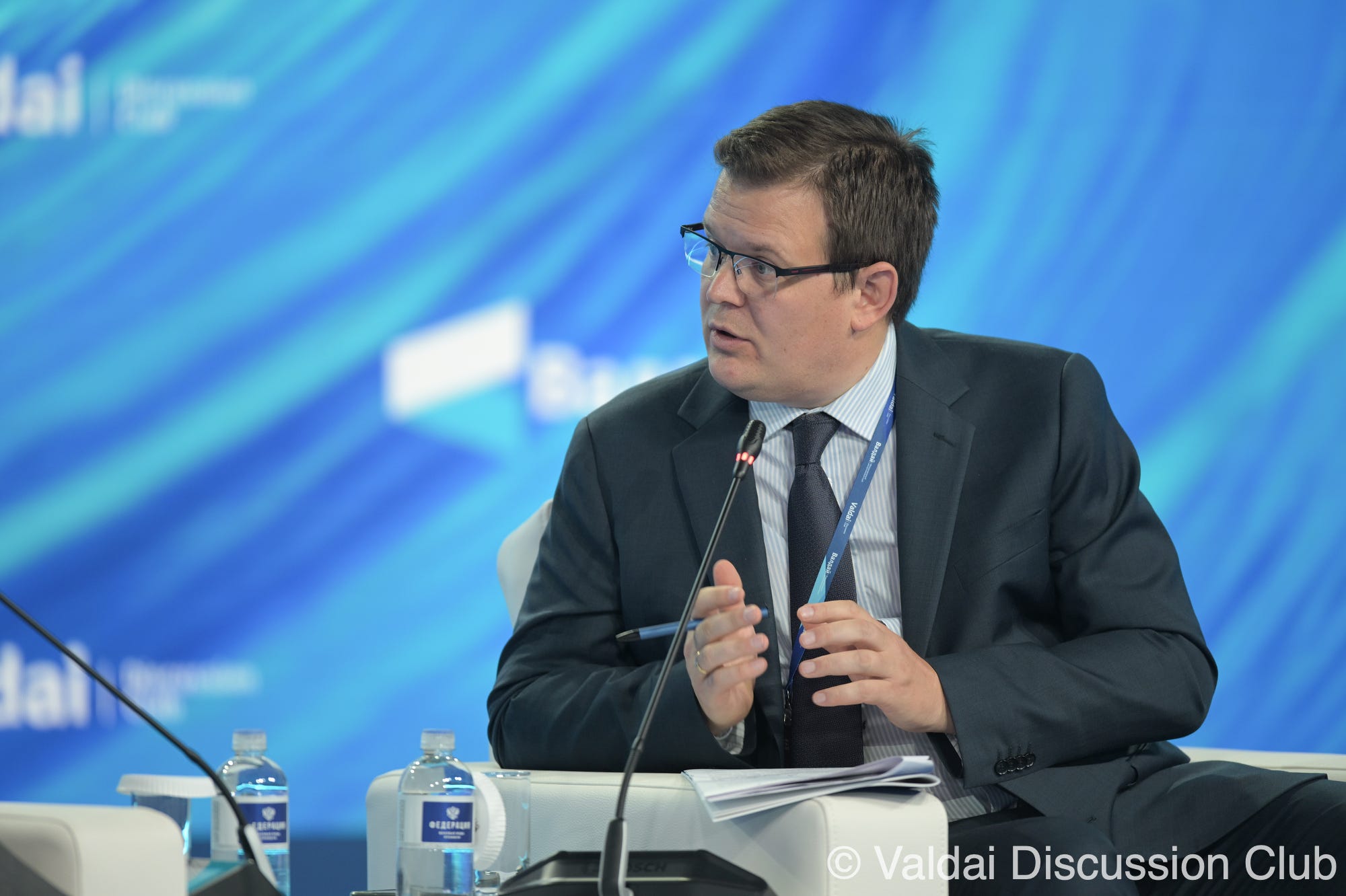
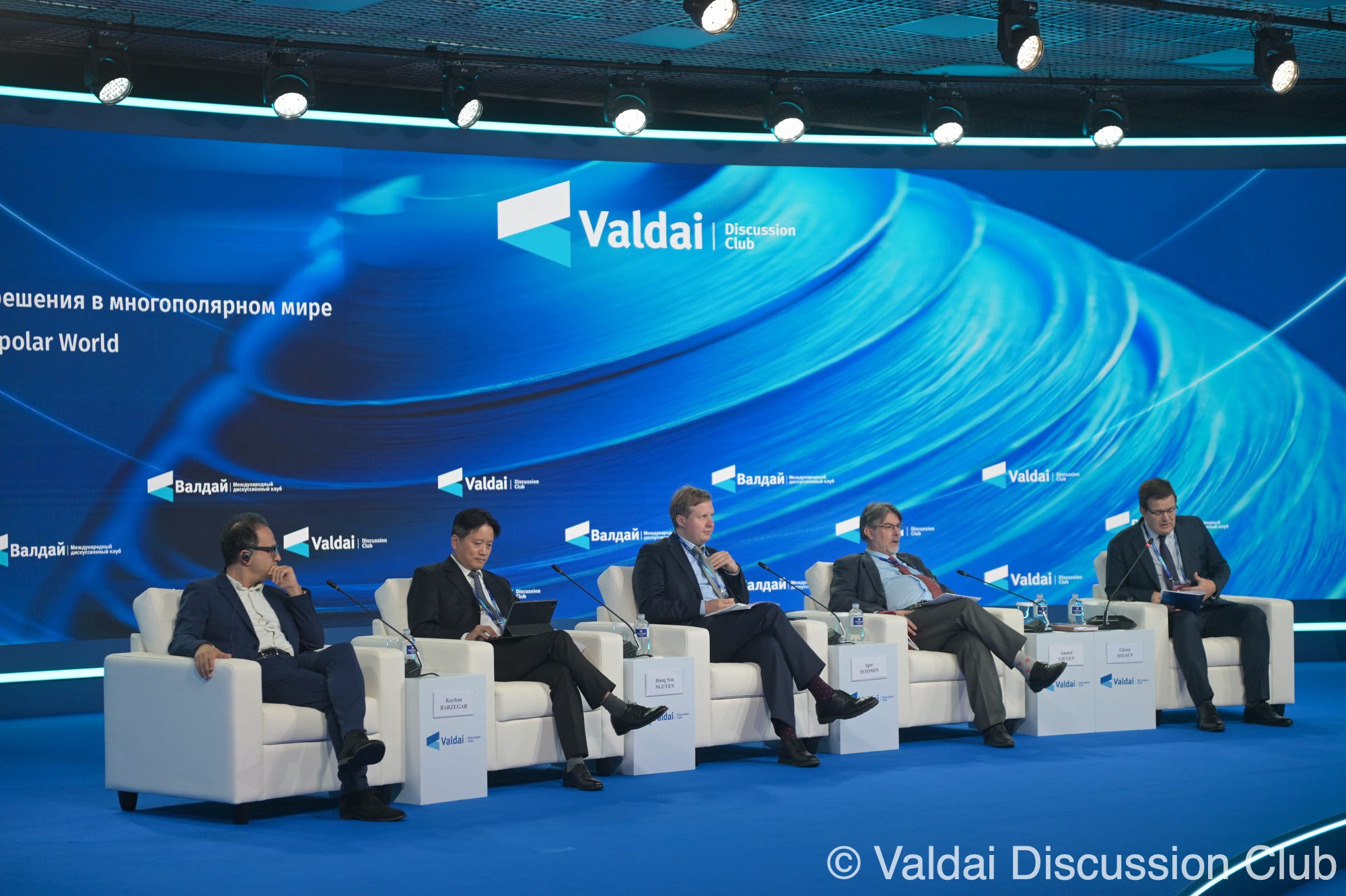
Prof. Glenn Diesen at the Valdai Discussion Club

Why does the international distribution of power matter? These are my notes for a panel I moderated at the Valdai Discussion Club in Sochi, Russia.
In my experience, there are fiercely competing assumptions and expectations about the how the international distribution of power affects security. The risk is therefore that we operate with different assumptions and do not understand each other.
Bipolarity
During the Cold War, we had a bipolar distribution of power (two centres of power). Some remember this period as being more stable due to the clarity, predictablility, and enduring loyalties. For Western Europe, it set the conditions for unity under US leadership.
Others view bipolarity as causing instability as only having two centres of power creates an extreme zero-sum logic. If one side loses the other gains. Without a third party that could end up on top, one centre of power would be prepared to suffer greatly economically or militarily as long as the losses are greater on the other side.
Unipolarity
After the Cold War, we had a unipolar distribution of power (one centre of power). This system was assumed by many (primarily in the West) to offer stability as the international anarchy and security competition was mitigated. With one centre of power, there was less risk of great power rivalry, and it was assumed to offer universalism that strengthen common values and rules (end of history). For Europe, the unipolar order extended unity as the Europeans aspired for collective hegemony with the US.
Others see the unipolar distribution of power to have introduced extreme instability as it is unlikely to accommodate genuine multilateralism required for the complexity and pluralism of civilisations. International law based on mutual constraints will also diminish as a hegemon will not constrain itself. Predictably international law based on sovereign equality was replaced by the “international rules-based international order” based on sovereign inequality. Furthermore, unipolarity is inherently a temporary phenomenon as the system depends on keeping down other great powers, which exhausts the hegemon and thus incentives collective balancing by the rising powers. The hegemon also has a proclivity to embrace Ideologies of superiority to legitimise the concentration of power, which makes it more hostile to accepting an equilibrium from emerging.
Multipolarity
The current era is defined by a multipolar system, which unlike the pre-WW2 multipolar system is no longer Western-centric.
The assumptions of stability create optimism for BRICS, the SCO and the Greater Eurasian Partnership. The end of the hegemon that must divide and rule, is expected to lay the conditions for peace. The ability to accommodate diversity, complexity, and multilateralism is expected to produce stability. Small- and medium-sized countries are optimistic as the opportunity to diversify economic connectivity results in greater prosperity and political autonomy. Furthermore, proper multilateralism and international law based on mutual constraints and sovereign equality becomes a possibility.
Others expect instability due to the return of great power rivalry, unpredictability, and shifting loyalties. For Europe, a multipolar system entails the US pivoting away from Europe and the continent losing its solidarity and stability. Furthermore, the non-Western world will for the first time in centuries be in a position to demand equal representation.
Panic should be expected as centuries of identifying as benign hegemon that rule the world for the benefit of the world will come to an end. However, the subsequent conflicts can then be seen as a temporary consequence of the transition from unipolarity to multipolarity.
There is no utopia waiting. The conflicts of the unipolar order will be replaced with a different set of conflicts of a multipolar system.
'For Europe, a multipolar system entails the US pivoting away from Europe and the continent losing its solidarity and stability. Furthermore, the non-Western world will for the first time in centuries be in a position to demand equal representation.'
Fully agree, Professor, which is one of the reasons why Europe clings to the ideology of megaloliberalism (my version of liberal hegemony with a few differences) so desperately.
'However, the subsequent conflicts can then be seen as a temporary consequence of the transition from unipolarity to multipolarity.'
Again fully agree. The tectonics will be tense until the plates realign, but once they do, the multipolar political ecosystem which we now inhabit should produce a relatively stable balance of powers. Climate change is the biggest and blackest of all black swans, which will cause a great deal of chaos, but direct confrontations between the blocs should be fewer and less violent.
Thank you for your cogent and concise breakdown.
To be honest, I think all systems can produce stability or foment chaos. All orders are built on the twin pillars of power and legitimacy, and a lot depends on how healthy and how strong both of these are. The power of the liberal order has seriously waned relative to others, and its legitimacy has been bulldozed into the ground with Gaza and Israel breaking most every single rule of the rules-based order.
When orders fail, those that continue to believe in them become both too blind and too brave for their own good. Europe embodies this perfectly at present in my view.
Anyway, just some of my waffly thoughts. Thank you once again, Professor Diesen, for this and for your work in general. You bring reason and pragmatism to help fight back against all the ideology and hubris.
A very interesting discussion and many if not all the points are very valid. I feel that there is an elephant in the room that was not considered. As all this present mess is a banking caused mess. The present and probably near future conflicts are to help prop-up the failing dollar, the slow asset stripping of Europe and the UK, probably all the G7 if allowed by the brought governments. The insistence that expensive weapons should be bought to fight a war that the populations do not want against a country that is no threat. To buy expensive gas as the only cheap form was terminated, which will cripple industries which now get sold and asset stripped. To allow too much migration to create conflict, which will allow the introduction of mass surveillance, digital CBDCs, bio-metric ID, thereby handing total control to the proposed next set of rulers. In the mean time we all get slowly boiled!